 NOAA
NOAA

ITST History
ITST History
The arrangements for each ITST are unique to the situation and are intended to strike a balance between addressing information requests from the host government and research questions from scientists. ITSTs can and should meet the needs of both affected communities and participating survey scientists and experts. Logistics need to be flexible. For small surveys with limited geographic scope, individual scientists should coordinate directly with the UNESCO-IOC/ITIC. For large surveys involving many teams, an ITST Science Focal Point (Coordinator, Chief Scientist) can be identified to lead the science efforts.
Since September 2009, five ITSTs have been organized, each distinct in their arrangements. For the September 29, 2009, Samoa tsunami (ITST-Samoa), a single, coordinated team of more than 60 scientists conducted surveys from October 14 to 23 (two weeks after) in collaboration with the Samoa Ministry of Natural Resources and Environment; the teams stayed at a central compound, shared data, and compiled one preliminary report that was presented to the Samoan Government on October 26. This ITST, with strong support from SPC/SOPAC (Secretariat of the Pacific Community/ Applied Geoscience and Technology Division), UNESCO, and ITIC, set the benchmark for a coordinated ITST to support early recovery, and demonstrated that working together will produce a much stronger and valuable outcome than working individually.
A similar smaller effort was coordinated for the same tsunami in Tonga (ITST-Tonga, November 2009) where two teams (New Zealand, Japan) with Tongan government logistics collaborated with their government scientists to survey Niuatoputapu island. The ITST-Mentawai conducted after the October 25, 2010, Mentawai, Indonesia, tsunami also followed a similar process; because access was arduous, only five teams conducted surveys, and because of the small number, coordination and submission of preliminary reports was promptly achieved.
After the February 27, 2010, Chile tsunami, UNESCO Santiago and ITIC worked to coordinate the ITST-Chile where more than 25 teams and 70 scientists conducted surveys between mid-March and May. Unlike Samoa or Tonga, where the impact was localized and the area small, the survey area was extensive, covering 800 km of coast. In this ITST, coordination consisted of briefings where incoming and outgoing teams could share information. Identification badges and letters of support in Spanish were also provided to facilitate access. ITIC implemented a secure information-sharing environment for posting files and sending messages among all the scientists. Due to the dispersed nature of the surveys (in survey time and area), it was difficult to compile a summary report for ITST-Chile.
Conduct of the ITST-Japan after the March 11, 2011, tsunami in northern Japan, was built to augment the strong national post-tsunami survey arrangements and complicated by the nuclear safety issue. In this situation, it was announced through the ITIC Tsunami Bulletin Board that Japan requested that no international teams visit until later April, respecting search-and-rescue operations due to the high number of casualties (25,000+), difficult logistics, and knowing that many Japanese scientists were extremely busy as part of the national response. ITST-Japan also directly informed the US National Science Foundation (NSF) in March, and through its Dear Colleague Letter in April, NSF strongly suggested coordination with UNESCO/NOAA (ITIC) when funded. It was envisioned that later surveys, such as those of ITST-Japan, should ideally concentrate on detailed investigations of specific locations or topics in collaboration with Japanese colleagues who were part of the national data collection efforts.
Information sharing, inquiries of interest, and plans for conducting a post-tsunami survey begin immediately after a tsunami. The Tsunami
Bulletin Board (TBB), a listserve hosted by ITIC since 1995, has been used to share tsunami event information, including survey plans. The TBB is a service available to tsunami professionals and includes many international research scientists; members also receive Pacific Tsunami Warning Center and West Coast/Alaska Tsunami Warning Center messages, so they are immediately aware when a tsunami occurs.
Since September 2009, five ITSTs have been organized, each distinct in their arrangements. For the September 29, 2009, Samoa tsunami (ITST-Samoa), a single, coordinated team of more than 60 scientists conducted surveys from October 14 to 23 (two weeks after) in collaboration with the Samoa Ministry of Natural Resources and Environment; the teams stayed at a central compound, shared data, and compiled one preliminary report that was presented to the Samoan Government on October 26. This ITST, with strong support from SPC/SOPAC (Secretariat of the Pacific Community/ Applied Geoscience and Technology Division), UNESCO, and ITIC, set the benchmark for a coordinated ITST to support early recovery, and demonstrated that working together will produce a much stronger and valuable outcome than working individually.
A similar smaller effort was coordinated for the same tsunami in Tonga (ITST-Tonga, November 2009) where two teams (New Zealand, Japan) with Tongan government logistics collaborated with their government scientists to survey Niuatoputapu island. The ITST-Mentawai conducted after the October 25, 2010, Mentawai, Indonesia, tsunami also followed a similar process; because access was arduous, only five teams conducted surveys, and because of the small number, coordination and submission of preliminary reports was promptly achieved.
After the February 27, 2010, Chile tsunami, UNESCO Santiago and ITIC worked to coordinate the ITST-Chile where more than 25 teams and 70 scientists conducted surveys between mid-March and May. Unlike Samoa or Tonga, where the impact was localized and the area small, the survey area was extensive, covering 800 km of coast. In this ITST, coordination consisted of briefings where incoming and outgoing teams could share information. Identification badges and letters of support in Spanish were also provided to facilitate access. ITIC implemented a secure information-sharing environment for posting files and sending messages among all the scientists. Due to the dispersed nature of the surveys (in survey time and area), it was difficult to compile a summary report for ITST-Chile.
Conduct of the ITST-Japan after the March 11, 2011, tsunami in northern Japan, was built to augment the strong national post-tsunami survey arrangements and complicated by the nuclear safety issue. In this situation, it was announced through the ITIC Tsunami Bulletin Board that Japan requested that no international teams visit until later April, respecting search-and-rescue operations due to the high number of casualties (25,000+), difficult logistics, and knowing that many Japanese scientists were extremely busy as part of the national response. ITST-Japan also directly informed the US National Science Foundation (NSF) in March, and through its Dear Colleague Letter in April, NSF strongly suggested coordination with UNESCO/NOAA (ITIC) when funded. It was envisioned that later surveys, such as those of ITST-Japan, should ideally concentrate on detailed investigations of specific locations or topics in collaboration with Japanese colleagues who were part of the national data collection efforts.
Information sharing, inquiries of interest, and plans for conducting a post-tsunami survey begin immediately after a tsunami. The Tsunami
Bulletin Board (TBB), a listserve hosted by ITIC since 1995, has been used to share tsunami event information, including survey plans. The TBB is a service available to tsunami professionals and includes many international research scientists; members also receive Pacific Tsunami Warning Center and West Coast/Alaska Tsunami Warning Center messages, so they are immediately aware when a tsunami occurs.


Quick Links



Resources
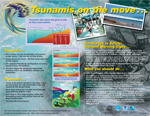
Tsunami Awareness Poster
Available in English, Spanish, Chinese, French, Japanese, Korean, Portuguese, Singalese.
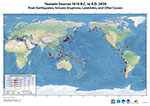
Global & Regional Hazard Maps
Tsunami Sources, Significant Earthquakes, Significant Volcanic Eruptions, Tsunami Icosohedron Globe.


TsunamiTeacher USA
Tsunami Basics
Also on YouTube
(w/closed captioning)
Learn the basics of tsunamis. Available in English, Samoan.