 NOAA
NOAA

ITST Technical Clearinghouse
ITST Technical Clearinghouse
It is important that data collected during post-tsunami field surveys be contributed to a data repository and eventually assimilated into a long-term tsunami data archive. Tide-gauge recordings provide immediate confirmation that a tsunami has occurred and are useful for model validation, but the majority of data that describe the full extent and severity of a tsunami are collected during field surveys. All of these data are essential for tsunami hazard assessment, forecast and warning, inundation modeling validation, preparedness, mitigation, education, and research.
During and following field surveys, data can be shared through a data repository or tsunami technical clearinghouse (TTC) such as that coordinated through UNESCO-IOC or other agency. The establishment of a TTC after a major tsunami can provide the central framework for coordination of activities and integration of scientific investigations with government response. The goals of a TTC, which include at a minimum an electronic information server but could also include a physical location, are to assist in the response to, damage assessment of, and early recovery from the natural disaster without increasing the burden on emergency officials; facilitate researcher access to the affected areas; and contribute to the capture of valuable and perishable data. Central to an ITST and its TTC is the tenet that the data collected are owned by the investigators themselves and will be proprietary for a length of time to allow them to conduct research and publish their results.
After the end of each ITST and its information-sharing through a TTC, principal investigators should submit all tsunami survey data to the International Council for Science (ICSU) World Data Center (WDC)-Marine Geology and Geophysics (collocated with the US NOAA National Geophysical Data Center [NGDC]) whose personnel are responsible for maintaining the world’s long-term tsunami data archive. NGDC-WDC and ITIC work together to collect tsunami event data. The archive so far consists of tsunami histories (event and runup), hazard photos, videos, and references, as well as data on tsunami deposits, coastal water levels, and deep-ocean bottom pressure recorder measurements.
During and following field surveys, data can be shared through a data repository or tsunami technical clearinghouse (TTC) such as that coordinated through UNESCO-IOC or other agency. The establishment of a TTC after a major tsunami can provide the central framework for coordination of activities and integration of scientific investigations with government response. The goals of a TTC, which include at a minimum an electronic information server but could also include a physical location, are to assist in the response to, damage assessment of, and early recovery from the natural disaster without increasing the burden on emergency officials; facilitate researcher access to the affected areas; and contribute to the capture of valuable and perishable data. Central to an ITST and its TTC is the tenet that the data collected are owned by the investigators themselves and will be proprietary for a length of time to allow them to conduct research and publish their results.
After the end of each ITST and its information-sharing through a TTC, principal investigators should submit all tsunami survey data to the International Council for Science (ICSU) World Data Center (WDC)-Marine Geology and Geophysics (collocated with the US NOAA National Geophysical Data Center [NGDC]) whose personnel are responsible for maintaining the world’s long-term tsunami data archive. NGDC-WDC and ITIC work together to collect tsunami event data. The archive so far consists of tsunami histories (event and runup), hazard photos, videos, and references, as well as data on tsunami deposits, coastal water levels, and deep-ocean bottom pressure recorder measurements.


Quick Links



Resources
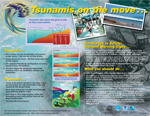
Tsunami Awareness Poster
Available in English, Spanish, Chinese, French, Japanese, Korean, Portuguese, Singalese.
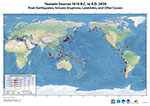
Global & Regional Hazard Maps
Tsunami Sources, Significant Earthquakes, Significant Volcanic Eruptions, Tsunami Icosohedron Globe.


TsunamiTeacher USA
Tsunami Basics
Also on YouTube
(w/closed captioning)
Learn the basics of tsunamis. Available in English, Samoan.