 NOAA
NOAA

NEAMWave 2012
The 9th Session of the Intergovernmental Coordination Group for the Tsunami Early Warning and Mitigation System in the North-eastern Atlantic, the Mediterranean and Connected Seas (NEAM) was held 10 to 13 September, 2012, in Southampton, United Kingdom.
Attendees included 63 participants associated with ICG/NEAMTWS-IX 9th Session of the Intergovernmental Coordination Group for the Tsunami Early Warning and Mitigation System in the North-eastern Atlantic, the Mediterranean and Connected Seas (ICG/NEAMTWS-IX), 7 of whom are provisional.
By the end of 2011, the NEAM region was the only region in the world where a Tsunami Warning System was not yet in operation. Several NTWCs have been established, some have also declared their availability to operate as Tsunami Watch Provider in interim status (Candidate Tsunami Watch Providers, CTWPs), subject to an accreditation procedure to be further developed and approved by the ICG/NEAMTWS in its 9th Session in September 2012. Two initial communication test exercises in 2010 were followed by the 1st Enlarged Communication Test Exercise (ECTE1) in 2011 with the involvement of all Tsunami Warning Focal Points (TWFP) in 31 countries in the NEAM region. On 22 May 2012, a second communication test, CTE2, was successfully conducted by CENALT with the additional aim of a preparatory exercise for NEAMWave12. NEAMWave12, as the first Tsunami Exercise in NEAM, assessed the national and local warning dissemination and response mechanisms put in place by Member State CPAs upon the reception of a Tsunami warning from their TWFPs. In addition NEAMWave12 addressed the questions related to the evaluation of alert messages by CTWPs and the issuance of the tsunami messages to TWFPs, as in the previous communication test exercises. NEAMWave12 took place from November 27 to 28, 2012.
The objectives proposed for NEAMWave12 were:
1. Validate and evaluate the Candidate Tsunami Watch Providers (CTWP) dissemination process of
issuing Tsunami Messages in the NEAM region;
2. Validate and evaluate the procedures for countries to receive and confirm the Tsunami Messages
issued by the CTWP trough their National Tsunami Warning Centres (NTWC), or the country
Tsunami Warning Focal Points (TWFP) or the country Tsunami National Contacts (TNC).
3. Validate and evaluate the dissemination of the warning messages to the relevant agencies that
are responsible for emergency response.
4. Validate and evaluate the organizational decision making process about public warnings and
evacuations.
5. Identify the modes that would be employed to notify and instruct the public. Within the above
framework, each country should develop its own specific objectives for the exercise.
NEAMWave12 involved the simulation of the assessment of a tsunami, based on an earthquake-driven scenario followed by alert message dissemination by CTWPs (Phase A) and continued with the simulation of the TWFP/NTWCs’ and CPAs’ actions (Phase B), as soon as the message produced in Phase A has been received. There were multiple scenarios in NEAMWave12, where each CTWP was responsible for a single scenario and each non- CTWP Member State was asked to choose one single scenario to participate in the exercise. Phase A was planned as a drill exercise with a time-frame element focusing on the functional requirements of NTWCs which have declared their operational status as CTWPs. These CTWPs were responsible for scenario tsunami assessment and message dissemination to Tsunami Watch Recipients (TWFP/NTWC). Each CTWP was responsible for a single scenario. Phase B is open to Member States by invitation and may include different types of exercise, such as an orientation exercise, a drill, a table-top exercise or a functional exercise, within the discretion of each Member State. The exercises in relation to NEAMWave12 are described in more detail in ICG/NEAMTWS-IX documents.
For more information visit the NEAMWAVE Exercises webpage, click here.
| Document Title | Format/Size |
| IOC TS 103 Tsunami Exercise NEAMWave12 Manual (English) | PDF (30 MB) |
| NEAM Press Release (16 November 2012) | Webpage |
| NEAM Press Release (04 December 2012) | Webpage |

Quick Links



Resources
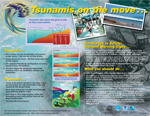
Tsunami Awareness Poster
Available in English, Spanish, Chinese, French, Japanese, Korean, Portuguese, Singalese.
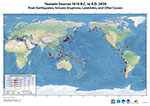
Global & Regional Hazard Maps
Tsunami Sources, Significant Earthquakes, Significant Volcanic Eruptions, Tsunami Icosohedron Globe.


TsunamiTeacher USA
Tsunami Basics
Also on YouTube
(w/closed captioning)
Learn the basics of tsunamis. Available in English, Samoan.