 NOAA
NOAA

Tsunami Warning Operations through Smart Cable Technology, Indonesia, January 2020
Strengthening Tsunami Warning Operations through Smart Cable Technology
Jakarta, Indonesia
13 January 2020
Tsunamis can be extremely deadly because of their quick onset and immediate impact. In order to warn the public within minutes, agencies must be able to detect and assess hazardous tsunamigenic events – specifically, tsunamis that are caused most often by earthquakes, but also sometimes by volcanic eruptions and/or landslides. For these, rapid and reliable characterization of the source, such as an earthquake’s magnitude and rupture characteristics, is a key requirement for calculating a useful tsunami wave amplitude and inundation forecast. Additionally, early direct measurement and validation that a tsunami was generated in the near field is critical to confirm the tsunami’s severity and for improving the accuracy of the tsunami wave forecast.
For the earliest detection, an ocean-based network of sensors nearest the active subduction zones is required. The required system must have broad coverage over the entire archipelago and assess both seismic and non-seismic tsunami sources on a local and regional scale, be robust with long-life, and ideally require little or no in-water maintenance and be sheltered from the rigors of ocean-surface dynamics. These requirements call for a cable-based system that would comprise the backbone of the system. To develop such a system will require a stable and sustainable commitment from government, and full deployment may require 10-20 years.
Over the past ten years, led by a United Nations ITU/WMO/UNESCO IOC Joint Task Force composed of government, private sector, and research universities, SMART (Science Monitoring And Reliable Telecommunications) cable technology has been identified as an economically feasible solution.
This stakeholder planning workshop will discuss Indonesia’s plans for the deployment of SMART cable technologies to strengthen earthquake and tsunami detection, source characterization, and tsunami wave forecasting.
Informational Documents
| Document Title | Format/Type |
| Agenda | PDF (395 KB) |

Quick Links



Resources
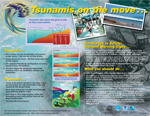
Tsunami Awareness Poster
Available in English, Spanish, Chinese, French, Japanese, Korean, Portuguese, Singalese.
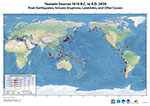
Global & Regional Hazard Maps
Tsunami Sources, Significant Earthquakes, Significant Volcanic Eruptions, Tsunami Icosohedron Globe.


TsunamiTeacher USA
Tsunami Basics
Also on YouTube
(w/closed captioning)
Learn the basics of tsunamis. Available in English, Samoan.