 NOAA
NOAA

Pacific Island Countries and Territories
ICG/PTWS-XXII Recommendations and Task Teams Summary Outcomes
| Document Title | Format/Type |
| ICG/PTWS-XXII Recommendations and Task Teams Summary Outcomes [21 September 2007] | DOC (34 KB) |
Southwest Pacific Ocean PTWS-XXII Working Group
| Document Title | Format/Type |
| Southwest Pacific Ocean PTWS-XXII Working Group Report | DOC (77 KB) |
| Southwest Pacific Ocean PTWS-XXII Working Group Intersessional PowerPoint | PPT (495 KB) |
| Southwest Pacific Ocean PTWS-XXII Working Group Sessional PowerPoint Presentation | PPT (355 KB) |
SOPAC Pacific Island Countries Regional Early Warning Strategy (Draft), April 2007
| Document Title | Format/Type |
| SOPAC Pacific Island Countries Regional Early Warning Strategy (Draft), April 2007 | PDF (122 KB) |
IOC/INF1233, Action Planning Outcomes - Pacific Island Countries, PTWS Tsunami Warning Operations Seminar, 2-3 April 2007
| Document Title | Format/Type |
| IOC/INF1233, Action Planning Outcomes - Pacific Island Countries, PTWS Tsunami Warning Operations Seminar, 2-3 April 2007 | DOC (81 KB) |
WG Meeting Minutes, 23 September 2006
| Document Title | Format/Type |
| WG Meeting Minutes, 23 September 2006 | PDF (96 KB) |
South Pacific Tsunami Awareness Workshop, July 2004
| Document Title | Format/Type |
| South Pacific Tsunami Awareness Workshop, July 2004 | PDF (147 KB) |
Recommendation ICG-PTWS-XXI.5: Working Group on the Tsunami Warning System in the Southwest Pacific Ocean
| Document Title | Format/Type |
| Recommendation ICG/PTWS-XXI.5 Section from PTWS-XXI Executive Summary | PDF (15 KB) |
Working Group Summary Report
SUMMARY REPORT OF 2nd MTG OF SOUTHWEST PACIFIC AND INDIAN OCEAN TSUNAMI WARNING SYSTEM (SWPIO TWS) WORKING GROUP
The 2nd meeting of the SWPIO TWS Working Group was convened from 6 to 7 pm, July 3, 2004, at the Suva Motor Inn, Suva, Fiji, after the end of the South Pacific Tsunami Awareness Workshop (SPTAW) held from July 1-3, 2004. The meeting was attended by:
Dr. Phil Cummins, Australia
Gaye Downes, New Zealand
Dr. Slava Gusiakov, Russia
Dr. Laura Kong, ITIC
Dr. Masturyono, Indonesia
Lasarusa Vuetibau, Fiji
Dr. Stuart Weinstein, PTWC
Dr. Masahiro Yamamoto, Japan
The following Terms of Reference were discussed and actions reported on:
- Based on SPTAW discussions and interest from participants (Emergency Manager Directors and Technical Experts from American Samoa, Cook Islands, Fiji, Papua New Guinea, Samoa, Solomon Islands, Tonga, and Vanuatu) for regional tsunami warning services, it was agreed that the SWPIO TWS should be split into two separate Working Groups, one to focus on the Indian Ocean and related seas between Indonesia, Papua New Guinea, and Australia (SWPIO TWS) and the second on the South Pacific Ocean encompassing from Indonesia and Papua New Guinea to the Cook Islands in the east and New Zealand and Australia northward to the equator (South Pacific TWS). The SP TWS WG would be proposed for formation at ITSU XX in October, 2005. During the current intersessional period, however, the existing working group would continue to work together as a proponent for both regional TWS efforts.
- SWPIO TWS Terms of Reference for the collection and assessment of capacities, requirements and interest in tsunami warning services satisfied by the SPTAW outcomes. Users Questionnaire asking for information on existing tsunami warning instrumentation, communications, and emergency responses, and tsunami awareness and other mitigation efforts distributed prior to meeting, and participants gave oral presentations on their activities and/or hazards.
- Japan reported that the Japan Meteorological Agency (JMA) has obtained funding to begin to implement its North and West Pacific Regional Tsunami Warning System in 2005. The area of service has been proposed to include the Pacific Ocean coasts of the Philippines and extending southward to Indonesia and Papua New Guinea. A kick-off ceremony and technical meeting is planned for March, 2005. JMA will work with PTWC to establish clear protocols for the issuance of regional warnings that are coordinated with the international or Pacific-wide warnings that PTWC issues.
- During the SPTAW, Cummins made a proposal on the conduct of a feasibility study to document the existing data and communication networks and determine the requirements for the establishment of a regional tsunami warning system for the Southwest Pacific. A summary is given below and the Powerpoint presentation that was given at the SPTAW, and the email prior to the meeting to SWPIO TWS WG members is attached at the end of this document.
Summary of Australia presentation and proposal
A presentation entitled “Feasibility Study for a Tsunami Warning System in the SW Pacific”
was given in the “Tsunami Training: Warning Guidance” session by Phil R. Cummins of Geoscience Australia. Dr. Cummins outlined the basic technical components of a warning system: (1) acquisition of continuous, real-time seismic data and its rapid analysis to determine potentially tsunamigenic events, and (2) event-triggered acquisition of near-real-time sea level data to verify whether a tsunami has actually occurred. For the seismic component, a substantial number of broadband stations are already deployed in the region by international agencies, and an increasing number of these use satellite data telemetry, so that the data are available in near-real-time over the internet. For the sea level component, a network of tide gauges have already been deployed in the region as part of the South Pacific Sea Level and Climate Monitoring Project (SPSLCMP), and near-real-time access to the high sample rate data required for tsunami monitoring seems to be technically feasible, although some additional infrastructure would be required. The analysis required for sea-level data is much simpler than that required for seismic data.
A tsunami warning system for the SW Pacific would likely involve establishment of a regional center capable of acquiring and rapidly analysing both seismic and sea level data. This would require a reliable high-bandwidth internet connection as well as highly-trained staff, and would likely take several years to develop. However, a proposal was put forward for a simple feasibility study that would, for a limited time, use earthquake alerts already produced by international agencies. A regional office would monitor only the sea level data from the SPSLCMP tide gauge network to verify whether a tsunami has actually occurred. This would have the advantage that the process of monitoring earthquake alerts and sea level data could be initiated at relatively modest cost, and potential for reliable and timely tsunami warnings could be assessed. If the results of the study were positive, suggesting that reliable warnings could be issued quickly, this may provide support for the establishment of a permanent tsunami warning system.
5. The proposal generated much interest and was followed on Day 3 of the SPTAW by a discussion session which recommended the formation of a South Pacific Working Group and endorsed the proposal to investigate the feasibility for tsunami warning services. These recommendations were further elaborated upon to formulate SPTAW Recommendations (Objectives, Outcomes, Activities) by the Tsunami Hazard & Risk Identification Working Group in the session that followed. The Workshop Recommendations are being presented for further discussion at the SOPAC STAR meeting, where a STAR Tsunami Working Group will be co-convened by Laura Kong and Atu Kaloumaira to receive further input and formulate Recommendations that will be put forth by the STAR Chair to the SOPAC General Council for acceptance. Once accepted, they can then become officially part of the SOPAC Work Programme and receive funding if a high priority.
6.
The Tsunami Session currently consists of at least about 8-9 papers, including the following:
Summary of SPTAW (SOPAC, ITIC)
Historical Database (GTDB/ITDB, Gaye Downes & Hugh Cowans)
Fiji (Vuetibau)
PNG (Anton, Lus)
SWPIO TWS Feasibility Study/SPTAW Feasibility Study (Cummins & Kaluwin)
PTWC (Chip McCreery)
Pacific Disaster Center (visualization, Stan Goosby)
These participants and other STAR attendees will be invited to participate in the STAR Working Group which must meet and formulate recommendations and a report given to the STAR Chair by Monday evening or Tuesday morning (September 20th or 21st). In the next weeks, ITIC and SOPAC will be in communication with everyone to discuss strategy and information needs.
Recommendation ITSU-XIX.4: Working Group on the Tsunami Warning System in the Southwest Pacific and Indian Ocean
Recommendation ITSU-XIX.4: Working Group on the Tsunami Warning System in the Southwest Pacific and Indian Ocean [endoresed by the IOC Executive Council at its 37th Session in June 2004]
WORKING GROUP ON THE TSUNAMI WARNING SYSTEM IN THE SOUTHWEST PACIFIC AND INDIAN OCEAN
The International Co-ordination Group for the Tsunami Warning System in the Pacific,
Recognizing that the Southwest Pacific and Indian Ocean has a significant threat from both local and distant tsunamis;
Further recognizing that some areas of this region are not covered by the PTWC;
Noting the interest of Member States in the Indian Ocean and Southwest Pacific regions to enhance their tsunami warning services;
Acknowledges that Indonesia has decided to develop its National Tsunami Warning System with already existing and planned upgrades to seismic and sea-level networks and that the PTWC provides distant tsunami warnings for the Southwest Pacific;
Further acknowledging that there may be mutual benefits to these regions and to the Tsunami Warning System in the Pacific from the establishment of this system;
Decides to establish an intersessional Working Group on the Southwest Pacific and Indian Ocean with the following Terms of Reference:
- to evaluate capabilities of countries in these regions for providing tsunami warning services;
- to ascertain requirements from countries in the Southwest Pacific and Indian Ocean for the tsunami warning services.
Requests Australia and ITIC to prepare a draft prior to the next SOPAC meeting for consideration by the Working Group.
Recommends that the Group be composed of representatives from Indonesia, Australia, Fiji, New Zealand, Japan, Observer from Papua New Guinea and the Directors of ITIC and PTWC and Chaired by the Representative of Indonesia.
Acknowledges that ITSU is the Co-ordination Body for the Tsunami Warning System in the Pacific (TWSP) and encourages non-ITSU Member States to contact the IOC Secretariat to request membership of the ICG/ITSU.
____________________
Financial implications:
US$ 5,000 for 2004; US$ 5,000 for 2005.


Quick Links



Resources

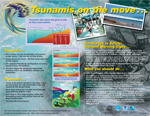
Tsunami Awareness Poster
Available in English, Spanish, Chinese, French, Japanese, Korean, Portuguese, Singalese.
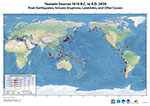
Global & Regional Hazard Maps
Tsunami Sources, Significant Earthquakes, Significant Volcanic Eruptions, Tsunami Icosohedron Globe.


TsunamiTeacher USA
Tsunami Basics
Also on YouTube
(w/closed captioning)
Learn the basics of tsunamis. Available in English, Samoan.